| Rank | Source | Best for | Access | Malaysia-specific? |
|---|---|---|---|---|
| 1 | Your own university’s sports science lab | Primary physiological/biomechanical data (VO2 max, strength, gait) | Free, via your faculty, needs ethics approval | Yes — your own sample |
| 2 | Institut Sukan Negara (ISN) | National sports science/medicine standards and protocols to benchmark against | Public information pages; data requests need formal approach | Yes |
| 3 | International journal databases (PubMed, SPORTDiscus, Google Scholar) | Published norms and comparable studies to cite against your own findings | Free via university library subscriptions or open access | No — used for comparison, not Malaysian data |
| 4 | Department of Statistics Malaysia (OpenDOSM) | General population context only | Free, public | Partial — no dedicated sports dataset (see below) |
| 5 | Ministry of Youth and Sports (KBS) / National Sports Council | Policy documents, funding announcements, programme names | Free, public website | Yes, but not granular participant-level data |
Why the Ranking Is Short and Honest
Sports science FYPs in Malaysia usually need one of two very different things: your own primary data (fitness testing, questionnaires, biomechanical measurements) or secondary context to justify your study’s importance. Unlike tourism or finance, there is no single national sports-statistics agency publishing granular, citable participation or performance data the way DOSM publishes labour or trade figures — so the ranking above reflects what each source can honestly give you, not a wish list.
This matters most at the proposal stage, when a supervisor will ask exactly where your Chapter 3 data is coming from before approving the topic — naming “national statistics” as a source when none exists is one of the fastest ways a sports science proposal gets sent back for revision. Deciding early which of the five sources above your specific design actually needs saves that revision cycle.
1. Your Own University’s Sports Science Lab — Best for Primary Data
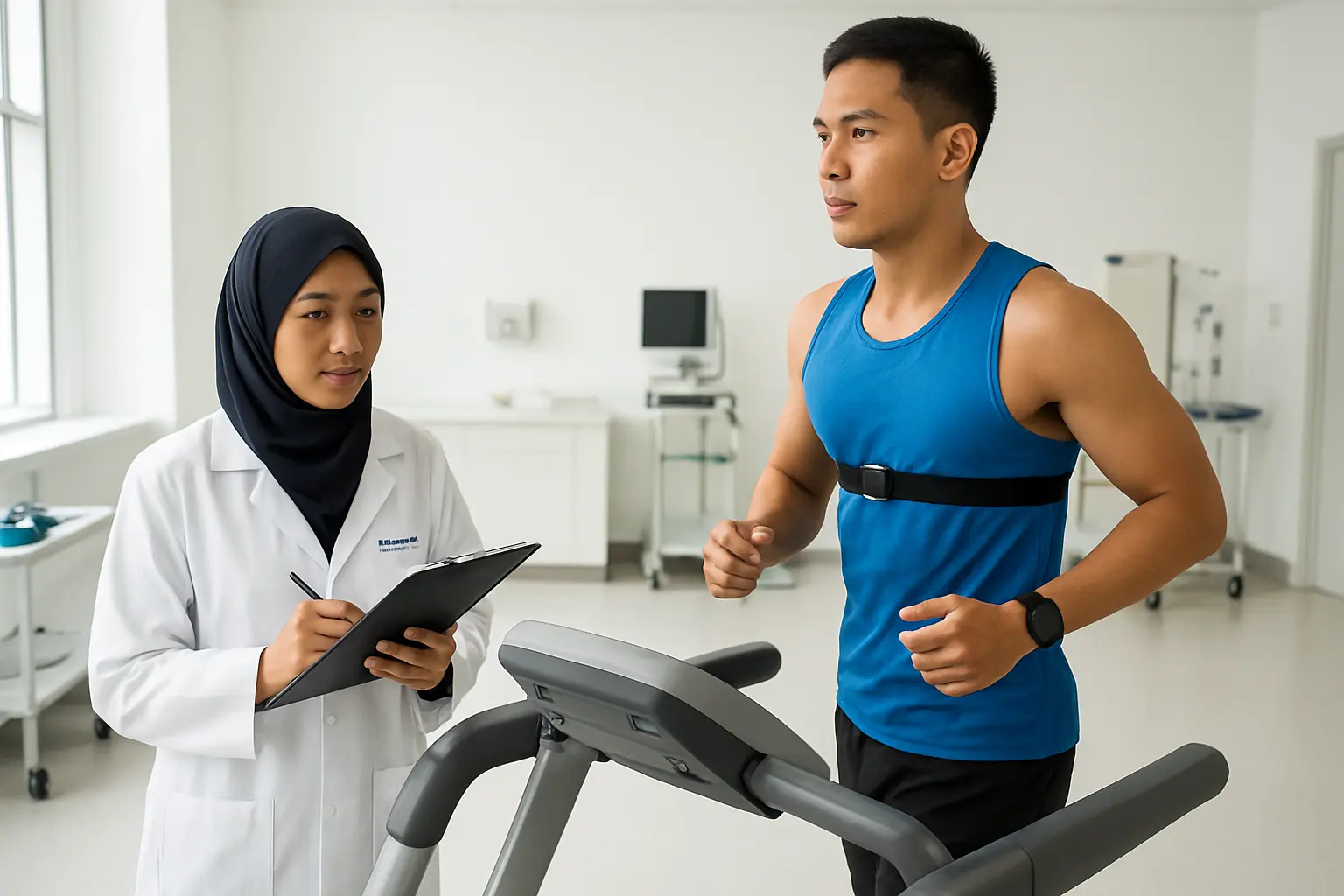
Many Malaysian public and private universities offering a sports science or exercise science programme run their own testing lab (treadmill/VO2 max testing, force plates, isokinetic dynamometers, anthropometry equipment) — check what your own faculty actually has before you design around it. For an undergraduate FYP, this is usually the realistic main data source — you collect your own sample of athletes, students, or a specific population, test them with equipment your faculty already owns, and analyse the results yourself. The trade-off is scale: your sample will usually be small and specific to your own institution or a local sports club, which is a limitation you state honestly rather than a flaw to hide.
2. Institut Sukan Negara (ISN) — Best for National Benchmarks and Protocols
ISN is Malaysia’s national sports institute, an agency under the Ministry of Youth and Sports (KBS) focused on sports science, sports medicine, and sports technology research and services for national athletes. For an FYP, ISN’s value is as a benchmark and protocol source rather than a raw-data download: its publicly stated areas of work give you a citable description of the national standard your own lab testing protocol should be compared against, and its existence is itself evidence that a formal, government-recognised sports-science research infrastructure exists in Malaysia — useful context for your background section. Direct access to ISN’s own athlete performance data is not something an undergraduate FYP should expect to obtain; if your topic genuinely needs it, a formal written request through your supervisor, well ahead of your data-collection window, is the honest path, with no guarantee of approval.
3. International Journal Databases — Best for Comparison Norms
PubMed, SPORTDiscus (where your university library subscribes), and Google Scholar are where you find the published norms your own results get compared against — a VO2 max reference range for your age group, a validated fitness-test protocol, or a prior study on a similar Malaysian or Southeast Asian sample. These are not Malaysian data sources themselves; they are how you contextualise the Malaysian data you collect. Search using the specific test or construct name plus “Malaysia” or “Southeast Asia” first, to check whether a directly comparable local study already exists before assuming yours is the first.
4. OpenDOSM — Useful Context, Not a Sports Dataset
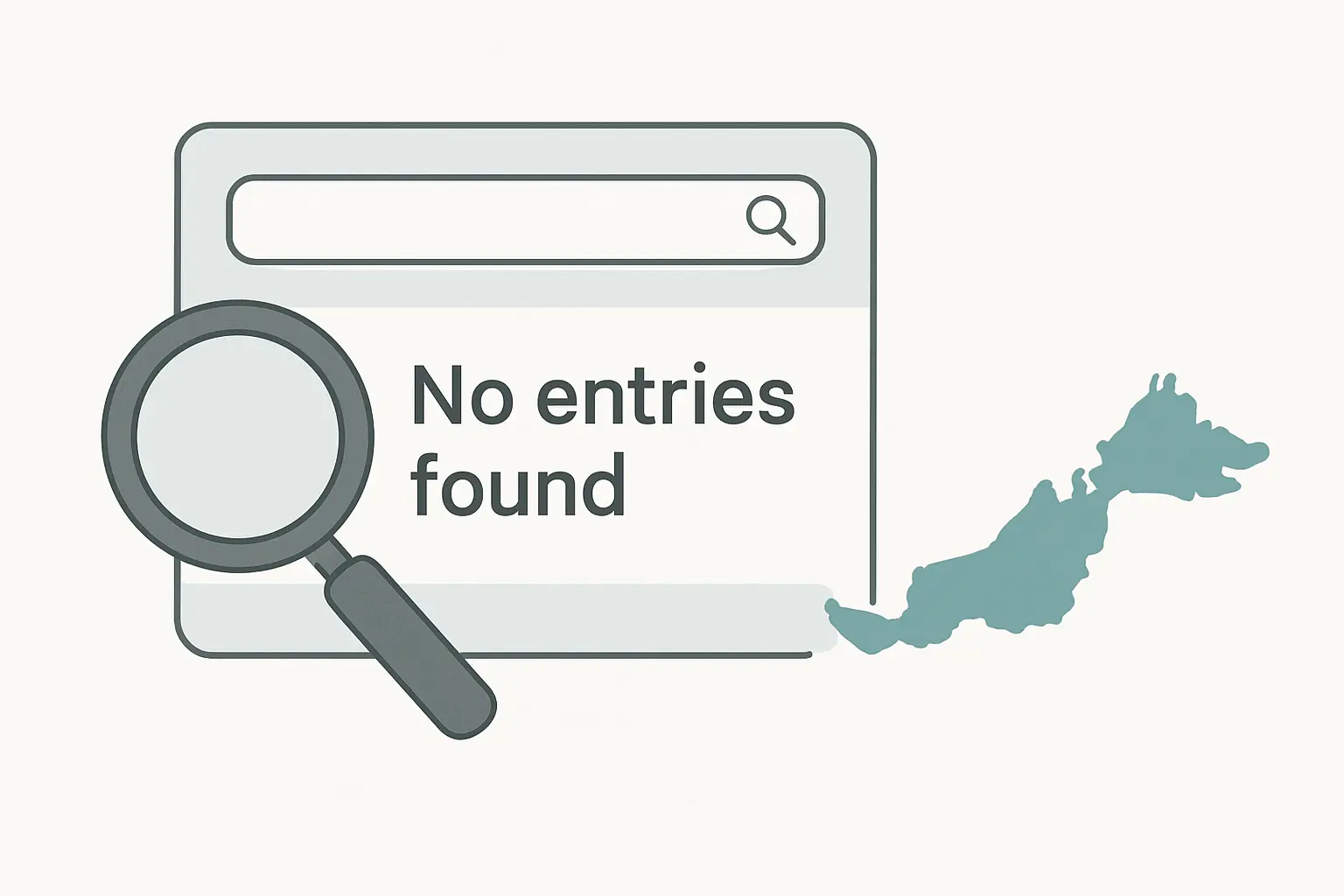
A direct search of OpenDOSM’s public data catalogue for “sukan” (sports) returns no dataset entries — there is no dedicated, regularly published Department of Statistics Malaysia dataset on sports participation, facility usage, or athletic performance at the time of writing. DOSM does publish general population and household data — for example, household access to basic amenities such as electricity and piped water — which can set demographic context, but none of it measures sports participation or performance. If your topic needs population-level sports participation figures, say plainly in your literature review that no dedicated national dataset was found, rather than citing a figure that does not exist.
5. Ministry of Youth and Sports (KBS) and the National Sports Council — Policy Context
KBS’s own website and that of its agencies (which include ISN and the Institut Penyelidikan Pembangunan Belia Malaysia, IPPBM, for youth-development research more broadly) are useful for naming actual government programmes, funding announcements, and the administrative structure your background section can reference accurately — for example, correctly naming ISN as the sports-science and sports-medicine agency under KBS, rather than inventing a generic “National Sports Data Centre” that does not exist. Treat this tier as citable for structure and policy, not as a source of participant-level statistics.
How to Choose Based on Your FYP Type
- Physiological or biomechanical testing study — primary data from your own university lab, benchmarked against international published norms (source 3).
- Sports participation or motivation survey — primary questionnaire data from your own sample; do not claim a national baseline exists to compare against, since one is not publicly published (source 4’s gap).
- Policy, funding, or programme-evaluation study — KBS and National Sports Council documents (source 5), supplemented with your own interviews or case data.
- Talent-identification or elite-athlete-adjacent topics — ISN’s published protocols and standards as your benchmark (source 2), with your own sample drawn from a school or club, not from ISN’s own athlete records.
Worked Example: Writing the Data-Sources Paragraph
Examiners want to see, in a few sentences, exactly where your numbers come from and why. A worked example for a lab-based study:
“Physiological data (VO₂ max, resting heart rate, body composition) were collected from a purposive sample of 32 university athletes using the institution’s own exercise physiology laboratory, following the sports science faculty’s standard testing protocol. Results were benchmarked against published normative ranges for the same age group from [named peer-reviewed source], since no Malaysia-specific national norm for this population is publicly available. A search of OpenDOSM’s data catalogue confirmed the absence of a dedicated national sports-participation or performance dataset as at the time of writing, which is why an international comparison norm was used instead of a local one.”
This paragraph does three things an examiner is checking for: it names exactly who collected the data and how, it names exactly where the comparison figures came from, and it states honestly why a Malaysian benchmark was not used instead of leaving the reader to assume one exists.
What Not to Cite as a Data Source
A few sources students sometimes reach for do not hold up under scrutiny and are worth naming directly: a coach’s or trainer’s personal estimate presented as a statistic (cite it as an expert opinion or interview finding instead, not as data); a fitness-app leaderboard or social media post (not a verifiable, representative source); a competitor thesis’s cited figure copied without checking the competitor’s own original source (always trace a statistic back to where it was first published); and a “widely known” participation percentage with no citation at all, which examiners will flag immediately as unverifiable.
Frequently Asked Questions
Is there a single Malaysian sports statistics agency I should be citing?
No — unlike tourism (Tourism Malaysia/DOSM) or education (KPT), sports research in Malaysia does not have one central statistics-publishing body; ISN and KBS provide protocols, standards, and policy documents rather than a public statistics portal.
Can I use MSSM (school sports) data for a university-level FYP?
Only if your own sample or case is drawn from schools under MSSM’s structure and you have the appropriate permission from the Ministry of Education and the school itself — MSSM competition results are not a substitute for your own collected data.
What if I can’t find any Malaysian study directly comparable to mine?
State that honestly in your literature review as part of your research gap — a genuine absence of prior Malaysian research on your specific topic is a legitimate justification for your study, not a problem to hide.
Do I need ethics approval to collect fitness-test data from participants?
Yes — physiological testing involving human participants needs the same university ethics committee approval as any other human-subjects research, including informed consent covering any physical risks of the testing itself.
Can I cite ISN’s website directly in my literature review?
Yes, as an organisational source describing Malaysia’s national sports-science infrastructure, cited as a webpage with the organisation as author in APA 7th edition, distinct from your peer-reviewed academic citations.
Is Strava or Garmin data acceptable as a data source?
Only with the device owners’ explicit informed consent and your ethics committee’s approval for using personally collected wearable data — treat it as primary data you are collecting, not as an existing public dataset.
How large does my own sample need to be?
It depends on your test and analysis plan — a tightly controlled lab-based physiological study can often work with a smaller sample than a survey-based participation study, which typically needs more respondents; work the number out with your supervisor using a power calculation or an established rule of thumb for your specific statistical test.
Should I compare my results to international norms if no Malaysian norm exists?
Yes, but state explicitly in your discussion that the comparison is against a non-Malaysian population and discuss whether ethnicity, climate, or training-culture differences might limit that comparison’s validity.
Can I approach a private gym or sports academy for data instead of my university lab?
Yes, if the gym or academy consents and your ethics committee approves the arrangement — treat it the same as any external-site data collection, with a written access agreement and the same consent procedures as a university-lab study.
Is it acceptable to use secondary data from a published Malaysian study rather than collecting my own?
Yes, for some FYP designs (a systematic review or a secondary data-analysis project), provided you cite the original study properly and your faculty’s rules allow a non-primary-data design — check this with your supervisor before committing, since many undergraduate sports science FYPs are specifically required to include primary data collection.
Once you know which data source fits your design, Tesify can help you turn your methodology and results into a fully drafted chapter — you remain responsible for verifying every source and figure it cites. Draft your FYP chapters with Tesify.
For designing the questionnaire a participation-survey study needs, see how to design a questionnaire for your FYP. For working out your sample size before testing begins, see how many respondents do I need for my FYP or thesis. For the general methodology chapter structure this comparison feeds into, see how to write the methodology chapter of a Malaysian FYP or thesis. For finding published literature to benchmark your results against, see best AI tools for finding papers and building a literature review. For choosing the right statistical test once your data is collected, see which statistical test should I use for my FYP data.