
A research proposal for an accounting FYP needs nine sections: title, background, problem statement, objectives and research questions, significance, scope, a short literature review, methodology, and a starter reference list. Below is a fully worked example built on audit quality and earnings management among Bursa Malaysia listed companies — not a real proposal to copy, but a complete model of the depth a supervisor expects before approving your topic.
Why a Proposal Is Not a Mini-Thesis
A proposal convinces a committee the study can actually be finished with the data, time and skills an undergraduate has access to — it is a feasibility document, not a compressed thesis. For accounting FYPs specifically, feasibility usually comes down to one question above all others: is the data publicly available, and can it be reconciled into a usable sample within one semester? A proposal that names a rich research question but never confirms the data exists is the single fastest way an accounting proposal gets sent back.
The Nine Sections, Worked in Full
1. Working Title
Audit Quality and Earnings Management Among Bursa Malaysia Main Market Companies (2021–2025)
2. Background
Earnings management — the use of accounting choices within the flexibility allowed by financial reporting standards to influence reported earnings — has been widely studied internationally as a threat to financial statement reliability. Audit quality, commonly proxied in the literature by Big Four versus non-Big Four auditor status, is theorised to constrain earnings management by increasing the likelihood that aggressive accounting choices are detected and challenged. Malaysian-specific evidence on this relationship among Main Market companies, across the most recent reporting years, remains a live and open question that a well-scoped FYP can meaningfully contribute to.
3. Problem Statement
While the audit-quality-constrains-earnings-management relationship is well established in developed markets, Malaysia’s concentrated ownership structures and MFRS convergence with IFRS create a different institutional context whose effect on this relationship is not fully settled locally — this study examines whether Big Four audit quality is associated with lower discretionary accruals among Malaysian Main Market companies in the most recent five-year window with complete data.
4. Objectives and Research Questions
- Objective 1: To measure the level of discretionary accruals among the sampled companies.
RQ1: What is the level of discretionary accruals among Bursa Malaysia Main Market companies in the study period? - Objective 2: To determine whether Big Four audit status is associated with lower discretionary accruals.
RQ2: Is Big Four audit status associated with lower discretionary accruals among the sampled companies? - Objective 3: To examine whether this association differs by company size.
RQ3: Does company size moderate the relationship between Big Four audit status and discretionary accruals?

5. Significance
Findings would be relevant to audit regulators assessing whether Big Four presence functions as an effective quality signal in the Malaysian market, to audit committees considering auditor appointment decisions, and to future FYP or postgraduate researchers extending this line of enquiry with additional years or a different accrual model.
6. Scope and Limitations
The study is limited to Main Market (not ACE Market) non-financial companies with complete financial data for the study period, since financial-sector companies follow different accounting and regulatory treatment that would distort a pooled accruals model. This scope is stated as a boundary, not apologised for — a defensible, well-justified narrow sample beats an unmanageable broad one.
7. Brief Literature Review
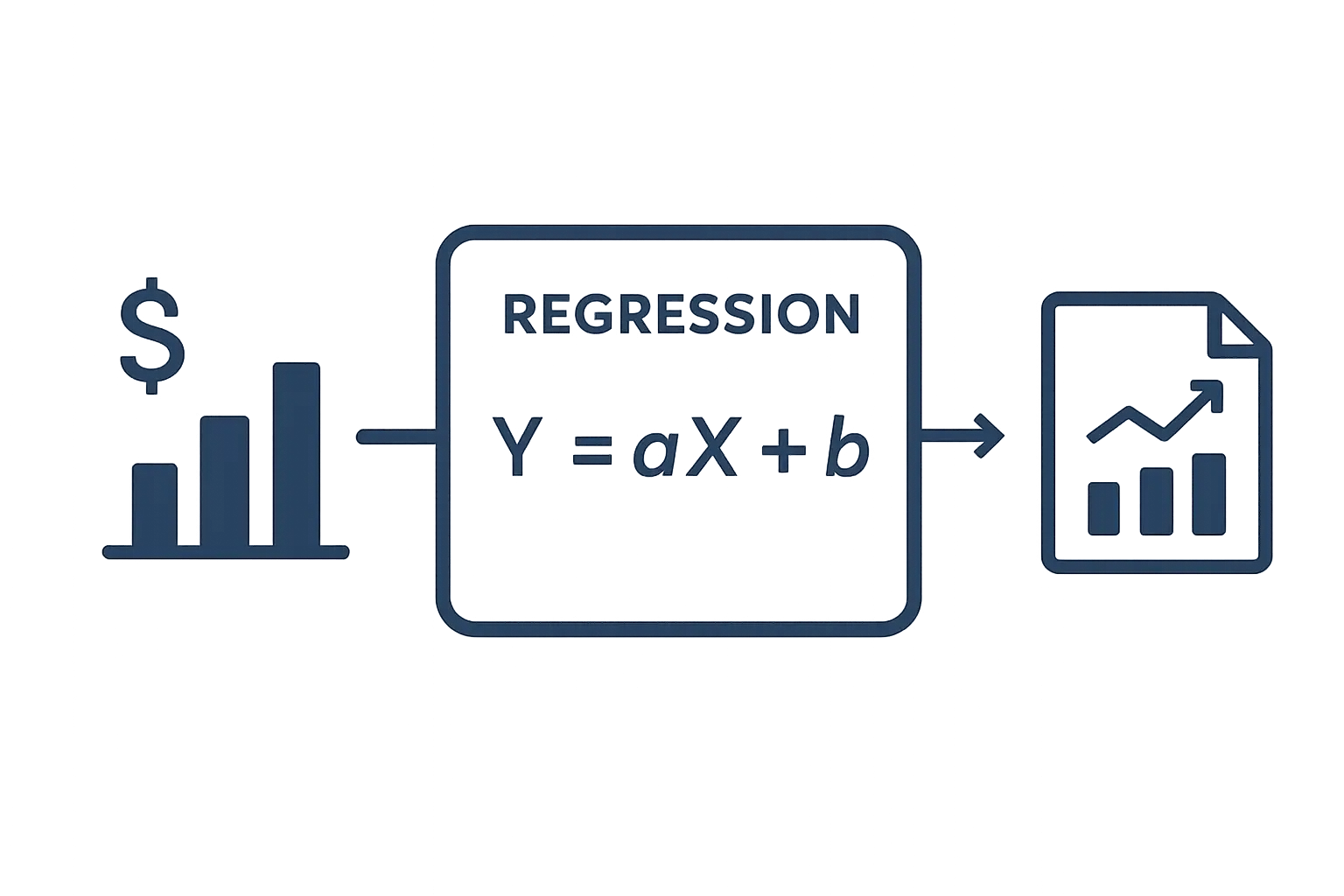
The Modified Jones Model, which estimates discretionary accruals as the residual from a regression of total accruals on the change in revenue (adjusted for the change in receivables) and property, plant and equipment, remains the most widely used measurement approach in the earnings-management literature — cite it explicitly as the model your methodology will use, rather than describing “an accruals model” vaguely. Auditor size (Big Four versus non-Big Four) is the most commonly used audit-quality proxy in this literature, on the theoretical basis that larger audit firms have more reputational capital at risk and stronger internal quality-control processes, though the proxy is also frequently criticised in the literature as an imperfect measure that should be triangulated against other governance variables where possible.
8. Proposed Methodology
Quantitative, archival design using panel data drawn from Bursa Malaysia-listed companies’ audited annual reports and financial statements. Population: Main Market non-financial companies with five consecutive years of complete data in the study window. Sampling: purposive, applying the completeness and sector-exclusion criteria stated in the scope. Data source: company annual reports (for auditor identity and financial statement line items) and Bursa Malaysia’s own listed-company filings. Analysis: discretionary accruals computed via the Modified Jones Model, then tested against Big Four audit status using a panel regression with company size as a moderating variable, choosing between pooled OLS, fixed-effects or random-effects specification based on a Hausman test.
9. Starter Reference List
Five to eight sources minimum for a proposal: the original Modified Jones Model paper, at least two recent studies applying it in a Southeast Asian or Malaysian context, MFRS/IFRS convergence documentation, and a source establishing the Big Four audit-quality proxy convention — in full APA 7 format, not just author names jotted down.
Confirming Data Access Before You Submit the Proposal
Before a single word of the proposal is finalised, spend an afternoon confirming that the data actually exists in the form your methodology assumes. For an archival accounting study, this means opening the actual annual reports of five or six candidate companies on Bursa Malaysia’s own announcements page and checking that the specific line items your model needs — revenue, receivables, property, plant and equipment, and the audit firm’s name on the auditor’s report page — are all present and consistently formatted across years. A surprising number of proposals are approved on the assumption that a clean, ready-made dataset exists, only for the student to discover in week four of data collection that half the target companies changed financial-year-end dates or restated prior-year figures, breaking the panel structure. Naming this feasibility check explicitly in your proposal — “data availability was confirmed via a pilot check of five companies’ 2021–2025 annual reports before this proposal was finalised” — is a small sentence that signals real preparation to a supervisor.
How to Adapt This Structure to a Different Accounting Topic
The nine-section shape holds regardless of your specific accounting sub-field. A tax-compliance FYP would swap the Modified Jones Model for a survey-based compliance-intention framework; an audit-fee-determinants FYP would keep the archival design but change the dependent variable and control-variable set; a sustainability-reporting FYP would swap discretionary accruals for a disclosure-index score built from a coding scheme. What stays constant across all of them is naming a specific measurement approach in the methodology section rather than describing your analysis in generic terms a reader cannot evaluate.
Common Mistakes That Get an Accounting Proposal Sent Back
- A problem statement that describes a phenomenon without stating a specific, answerable gap.
- No confirmation that the required financial data is actually publicly accessible before the proposal is submitted.
- Naming “regression analysis will be used” without specifying which model, which variables, or which diagnostic tests.
- Objectives and research questions that do not mirror each other one-to-one.
- A scope that tries to cover every listed company on Bursa Malaysia across every sector, rather than a defensible, justified subset.
Frequently Asked Questions
Can I use this exact topic for my own FYP?
Use it as a structural model only — choose your own accounting sub-field, variables and data source in consultation with your supervisor, since this example is illustrative and not meant to be copied as a real proposal.
Do I need access to a paid database like a financial terminal to do archival accounting research?
Not necessarily for an undergraduate FYP — company annual reports downloaded directly from Bursa Malaysia’s own announcements section, supplemented by the company’s own investor relations page, are often sufficient for a modest sample size.
How many companies do I need in my sample?
There is no single fixed number — panel-data accounting studies commonly balance the number of companies against the number of years, and your exact figure should be justified against what is actually available with complete data, not chosen arbitrarily.
What if some companies in my target sector have missing data for one year?
State your exclusion criteria explicitly (for example, “companies without five consecutive years of complete audited financial statements were excluded”) and report how many companies this removed from your initial population.
Can I study private companies instead of listed ones?
It is far harder to access private-company financial statements in Malaysia, so most accounting FYPs use listed companies specifically because their audited statements are publicly filed and accessible.
Should my proposal already include preliminary results?
No — a proposal is a plan, not a findings chapter; including even a small preliminary result usually signals to a committee that the “proposal” stage has already been skipped past.
Is the Modified Jones Model the only accruals model I can use?
No — it is the most common in the literature and the easiest to defend to an examiner because of how widely it is cited, but other models exist; state clearly why you chose the one you did if you use an alternative.
How is Chapter 1 of my full thesis different from this proposal?
Chapter 1 expands the proposal’s background and problem statement with more literature and detail once your topic is approved — the proposal is the compressed, feasibility-focused version that gets you permission to start.
Can my accounting FYP use a survey instead of archival financial data?
Yes — topics such as accountants’ or auditors’ perceptions, tax-compliance behaviour, or adoption of a new accounting standard are commonly studied through a questionnaire rather than company financial statements; the proposal structure above still applies, but the methodology and literature-review sections would centre on a survey instrument instead of an accruals model.
What if my supervisor wants a different audit-quality proxy than Big Four status?
Alternative proxies exist in the literature, such as audit-firm industry specialisation or audit-committee characteristics — discuss the trade-offs with your supervisor and cite the source establishing whichever proxy you settle on, since each carries different data-access implications.
Tesify can help you turn a structure like this into a fully drafted proposal for your own approved topic — you remain responsible for verifying every source, model and figure it produces. Draft your research proposal with Tesify.
For the general proposal structure this example specialises, see how to write a thesis proposal for a Malaysian FYP or postgraduate programme. For the full methodology chapter this proposal leads into, see how to write the methodology chapter of an accounting or finance FYP using Bursa Malaysia data. For where to find the underlying financial data, see best data sources for a finance FYP in Malaysia. For a comparable worked proposal in a different field, see what a research proposal for a marketing FYP in Malaysia should include. For choosing between panel-regression specifications once your data is ready, see which statistical test should you use for your FYP data.