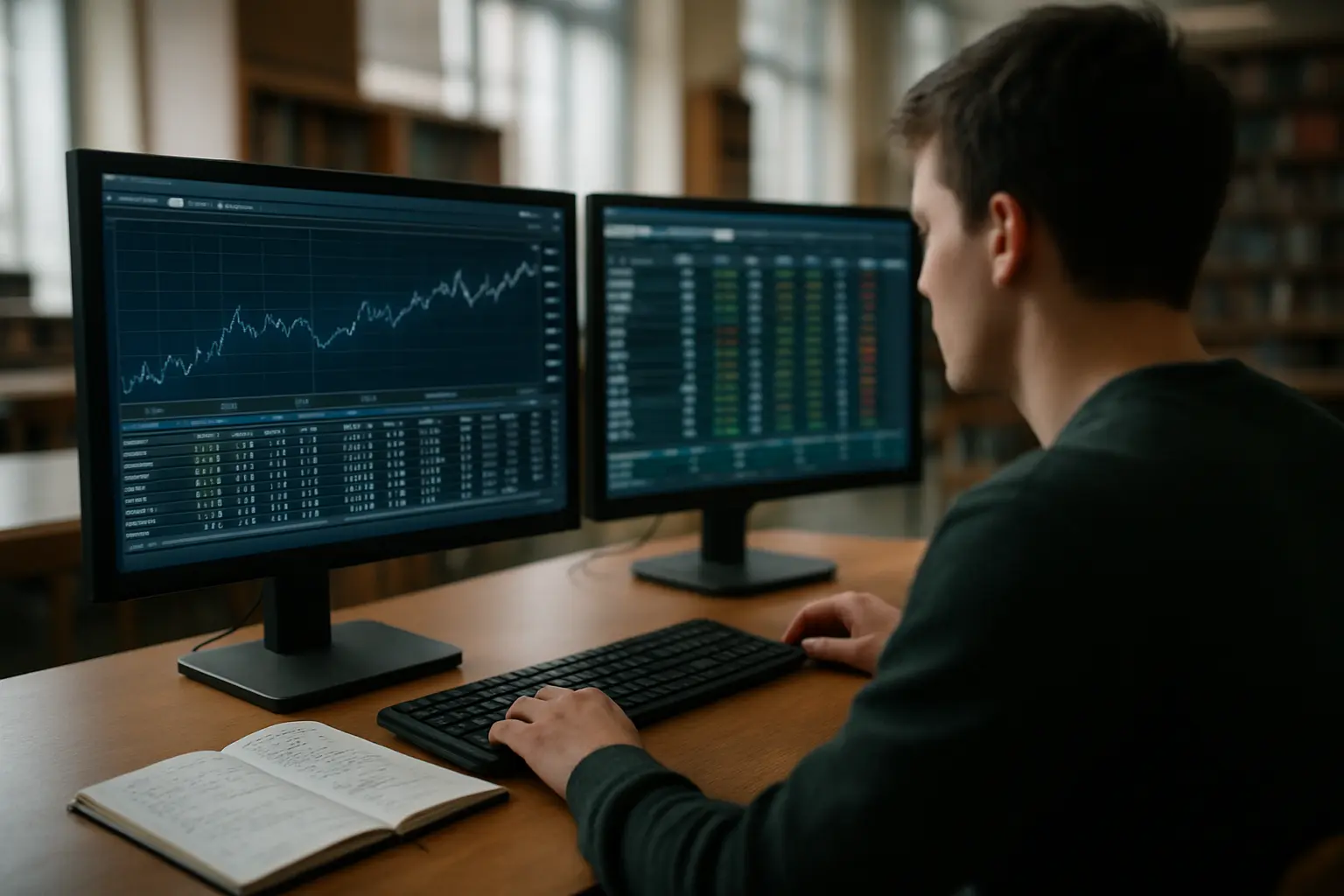
A finance FYP in Malaysia usually stalls at the same point: the proposal is approved, the model is chosen, and then the student discovers that five years of daily prices for forty Bursa Malaysia stocks, matched to the Overnight Policy Rate and quarterly GDP, do not come from one place. This comparison ranks the nine data sources Malaysian finance students actually use, from the free official portals to the terminals in the library, scored on the same criteria, with one recommendation per type of FYP. The table first, then the reasoning.
The comparison table
| Source | Cost to a student | Malaysian share prices | Company financials | Macro and rates | Export format | Best for |
|---|---|---|---|---|---|---|
| LSEG Workspace (formerly Refinitiv Eikon) | Free through subscribing university libraries, often on fixed terminals | Daily and intraday, adjusted, full history | Standardised statements, ratios, ownership | Yes, global | Excel add-in, CSV | Panel and event studies needing clean, adjusted series |
| Bloomberg Terminal | Free through subscribing libraries, terminal-bound, log-in queue | Daily and intraday, adjusted | Standardised statements, estimates, bonds | Yes, global | Excel add-in with download limits | Fixed income, sukuk and derivatives topics |
| Bursa Malaysia website | Free | Listing directory, announcements, historical data by request | Annual reports and quarterly results as filed | No | PDF; blocks automated tools | The primary source for anything you cite from a filing |
| Bank Negara Malaysia | Free | No | No | OPR, interbank exchange rates at fixed times, monetary and banking statistics | Excel and back series | Interest rate, exchange rate and banking studies |
| OpenDOSM | Free, with an API | No | No | GDP, CPI, labour force, trade, every public-sector open dataset | CSV, Parquet, API | Macro controls and any study using national statistics |
| CEIC | Free where the library subscribes | Indices only | No | Long Malaysian series back to the early 1990s, cross-country | Excel | Time-series and cross-country macro-finance studies |
| World Bank Open Data | Free | No | No | Annual development indicators for Malaysia and comparators | CSV, Excel, API | Cross-country annual panels |
| KLSE Screener | Free | Quotes, screener, dividends, warrants | Summary financials as reported | No | On screen | Building a shortlist of companies fast |
| i3investor | Free with registration | Quotes and market summary | Links to filings and forum commentary | No | On screen | Retail sentiment topics; never as a cited source |
How these were ranked
Six criteria, in order of weight: whether a Malaysian finance student can reach the source without paying, because the budget is zero; whether the share price series are adjusted for dividends, bonus issues and splits, which decides whether your returns are real; the depth and standardisation of company financials; coverage of the Malaysian macro and rate series a finance model needs as controls; the export format, because a source that only displays on screen will cost you a week of copying; and how easily the source can be cited so that an examiner can reproduce your dataset. Each source was checked from its own site on 30 August 2026; where a site refused our tools, we say so rather than describe it from memory.

1. LSEG Workspace: the cleanest series, if your library has it
LSEG Workspace is the current name of the platform Malaysian finance faculties have called Refinitiv Eikon and, before that, Thomson Reuters; LSEG describes it as bringing together trusted data, market-moving news, powerful analytics and AI-powered intelligence in one connected experience. For a student, what matters is narrower: adjusted daily prices for every Bursa Malaysia stock with a long history, standardised financial statements that make Tobin’s Q or leverage comparable across firms, ownership data, and an Excel add-in that pulls a whole panel in one formula. The limitations are access, since most libraries put it on a few fixed terminals with booking sheets, and the learning curve of its field codes. Download everything you might need in one sitting, save the raw file with the download date in the filename, and never rely on being able to get back to the terminal the week before submission.
2. Bloomberg Terminal: unmatched for bonds and sukuk, awkward for panels
The Bloomberg Terminal is the other subscription platform found in Malaysian business school libraries, and it is the only practical source for sukuk pricing, Malaysian Government Securities yields at daily frequency, and analyst estimates. Its Excel add-in carries monthly download limits per terminal, which can be exhausted by one ambitious student pulling ten years of daily data for a hundred companies, so agree the pull with the librarian first. Bloomberg’s product page describes the Terminal in general terms and says nothing about library booking or download limits, so those two points rest on how Malaysian business school libraries actually run their terminals; ask yours before you plan a pull. It ranks second because a plain equity panel is easier to build in Workspace, and fewer campuses have it.
3. The Bursa Malaysia website: the primary source you must still cite
Whatever database gave you the number, the document an examiner can check is the filing on the Bursa Malaysia website: the annual report, the quarterly results, the corporate governance report and the announcements that date every dividend and bonus issue. The listing directory gives you the population of Main Market and ACE Market companies by sector, which is the sampling frame our companion guide to the methodology chapter of an accounting or finance FYP shows you how to reconcile. Two warnings. The site blocks automated tools, so scraping it is not an option and citing it means visiting each page. And filings are PDFs, so financial statement items must be typed by hand or taken from a database and then spot-checked against the PDF, which is exactly the cross-check Chapter 3 should describe.
4. Bank Negara Malaysia: the rate and exchange rate series
Bank Negara Malaysia publishes the Overnight Policy Rate, the interbank foreign exchange rates recorded in Kuala Lumpur at 0900, 1200 and 1700 each business day, and the monetary and banking statistics that a study of bank performance, interest rate pass-through or ringgit volatility needs. On the day we checked, its national summary data page listed the OPR at 2.75 percent for July 2026 with back series available for download, and its exchange rate page carried its own terms of use for datasets, which you should read and cite. Series come as spreadsheets with the observation dates, which makes them the easiest macro data to merge with a price panel. For anything about banks, this is the first source, not the last.
5. OpenDOSM: national statistics with an API
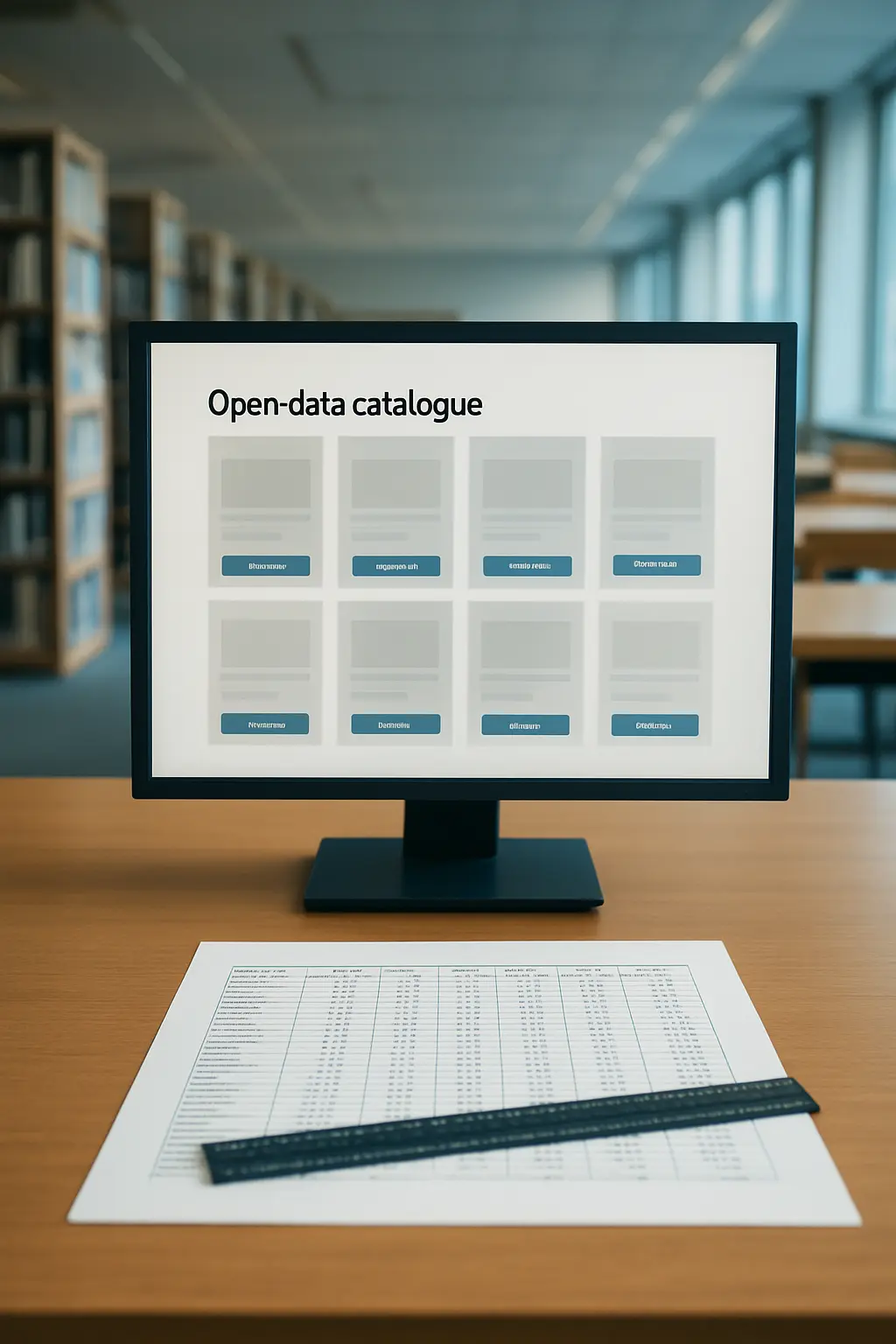
OpenDOSM is the open data portal of the Department of Statistics Malaysia. Its data catalogue, in the portal’s own words, hosts every open dataset from Malaysia’s public sector, and its most-viewed datasets on the day we checked included annual real GDP and GNI from 1970 to the present, population tables by state, and household income and expenditure. Datasets download as CSV or Parquet and can be pulled through the documented API, which means a quarterly GDP or CPI control can be refreshed with one script rather than retyped. Cite the dataset name, the release date shown on the portal and the download date, because national accounts are revised.
6. CEIC: long series and cross-country comparison
CEIC is a subscription macroeconomic database that many Malaysian university libraries carry. Its Malaysia page listed quarterly nominal GDP and real GDP growth with history back to 1991 on the day we checked, alongside hundreds of monthly and quarterly indicators, and the same layout exists for every ASEAN economy. It is the source to use when your finance FYP compares Malaysia with Indonesia, Thailand and Singapore, or when a time-series model needs thirty years of monthly data that the official portals only publish in fragments. It carries no company-level data.
7. World Bank Open Data: the annual cross-country panel
World Bank Open Data offers annual development indicators for Malaysia and every comparator country, free and downloadable as CSV, Excel or through an API. Its frequency is annual, which rules it out for most market studies, but for a cross-country panel on financial development, foreign direct investment or market capitalisation to GDP it is the standard source and the one examiners expect to see cited by indicator code.
8. KLSE Screener: the fastest way to build a shortlist
KLSE Screener is a free Malaysian site with a stock screener, a warrant screener, a heatmap, dividend and share-issue entitlements and financial news. It will not give you an exportable history, and its financial figures are summaries of what companies reported rather than standardised statements, so it should never be the cited source for a variable. What it does well is the step before data collection: filtering the market by sector, size or dividend record to decide which companies enter your sample, before you go to Workspace or the filings for the actual numbers.
9. i3investor: sentiment and forum data, with a warning
i3investor presents itself as a Bursa Malaysia market summary with a social forum, and registration is free. Its value to a finance FYP is narrow and specific: studies of retail investor sentiment, forum activity and attention effects have a local text source here that no terminal provides. For everything else it is a convenience layer. Do not cite a price, a ratio or a corporate action from it; find the same figure in the filing or the database and cite that.
One recommendation per type of FYP
Corporate finance panel, such as capital structure, dividend policy or governance and performance: LSEG Workspace for financials and prices, the Bursa filings for the spot-check and the citations, OpenDOSM for macro controls. Event study of announcements, earnings or dividends: Workspace or Bloomberg for adjusted daily prices and the FBM KLCI, the Bursa announcements for event dates. Bank performance, interest rates or ringgit exchange rate: Bank Negara Malaysia first, CEIC for long history, Workspace for bank-level data. Sukuk, bonds or Islamic finance instruments: Bloomberg, then Bank Negara for the benchmark rates. Cross-country study across ASEAN: CEIC and World Bank Open Data. Student whose library subscribes to nothing: Bursa filings, Bank Negara, OpenDOSM and World Bank will carry a finance FYP, at the cost of hand-collecting the company data; our guide to choosing the statistical test helps you keep the design within what free data can support.
Four habits that keep the dataset defensible
First, note the download date and the exact field or dataset name for every series, and put both in the variables table of Chapter 3. Second, check adjustment: compute one company’s return across a known bonus issue and confirm the series does not show a false crash. Third, spot-check a random sample of database figures against the filing and report the agreement in Chapter 3. Fourth, keep the raw downloads untouched and do all cleaning in a separate file, so that the numbers reported in Chapter 4 can be traced back; our guide to writing the results chapter shows how to present the descriptive statistics that this traceability makes possible. If your proposal promised a data source your library turns out not to have, our guide to writing a thesis proposal explains how to document the change rather than hide it. For the software that will read these files, see our comparison of statistical software for a Malaysian FYP.
Where Tesify fits, and where it does not
Tesify is not a data source and will not give you a price, a rate or a financial statement item; nothing numerical should ever be cited from an AI tool. What it does is take the dataset you have built and help you write around it: the data section of Chapter 3 with a source and download date per variable, the descriptive statistics narrative of Chapter 4, and a discussion that compares your estimates with the Malaysian studies you reviewed, all in the formal register finance faculties expect and with citations kept in step with your reference list. You remain responsible for every number, which is the standard the examiner applies.
Draft your finance FYP chapters with Tesify once the dataset is on disk.
Frequently asked questions
Which data source do Malaysian finance faculties use most?
LSEG Workspace, still called Eikon or Datastream by many supervisors, is the most common subscription platform in business school libraries; Bloomberg is found at fewer campuses. Ask your librarian which terminals exist and how to book them.
Are Bursa Malaysia share prices adjusted for bonus issues and splits?
Prices in a filing or on a quote page are the traded prices, not adjusted. Use the adjusted series from Workspace or Bloomberg for returns, or adjust manually using the corporate action announcements on the Bursa website.
Can I use Yahoo Finance or investing.com for Malaysian prices?
Many students do, but both sites refused our tools on the day we checked and neither documents its adjustment method for Bursa stocks. If you use them, say so, spot-check against a terminal series, and expect the examiner to ask.
Where do I get the Overnight Policy Rate history?
From Bank Negara Malaysia, which publishes the OPR with a downloadable back series and the date of each decision.
Where do I get Malaysian GDP and inflation data?
From OpenDOSM, the Department of Statistics Malaysia open data portal, as CSV or through its API, or from CEIC if your library subscribes and you need long monthly series.
Is Bloomberg free for students?
Only through a university library subscription, on the library’s terminals, and usually with a booking queue and monthly download limits. There is no student licence.
Can I cite KLSE Screener or i3investor in my FYP?
Cite them only for what they uniquely provide, such as a screening step or forum sentiment data. For prices, ratios and corporate actions, cite the filing or the database instead.
How many years of data do I need?
Five financial years is the usual minimum for a company panel; an event study needs at least 120 trading days before each event for the estimation window; a time-series model needs enough observations for the tests you plan, often ten years of monthly data.
What should I record when I download data?
The source, the exact dataset or field name, the download date, the currency and unit, and whether the series is adjusted. All five belong in the variables table of Chapter 3.