
How to write a literature review in one sentence: read systematically, compare studies in a matrix, organise your chapter by themes rather than by authors, and end every section pointing at the gap your research fills. The single failure that sinks most first drafts is summarising paper after paper — “Author A found X. Author B found Y.” — which proves you read, but not that you thought. This guide walks the full method step by step, with example sentences you can adapt, calibrated for Malaysian FYP and thesis writers working to a faculty handbook.
Step 1: Define the Question Your Review Must Answer
A literature review is not “everything about my topic”; it is the background needed to justify your study. Before searching, write your research questions at the top of a blank page and derive two or three review questions from them. If your study asks “does flexible work arrangement affect job satisfaction among Malaysian gig workers?”, your review questions become: what does research say about flexible work and satisfaction generally, what has been found in gig-economy contexts, and what has been done in Malaysia specifically. Everything you read must serve one of those questions — that rule alone cuts your reading pile by half.
The expected depth scales with your level: an FYP review demonstrates you understand the key work; a masters or doctoral review must position an original contribution. If you are unsure what your level demands, see FYP vs thesis vs dissertation in Malaysia before you calibrate your effort.
Step 2: Search Systematically and Log What You Did
Ad-hoc googling produces an ad-hoc review. Instead: list your key concepts and their synonyms (flexible work / remote work / telecommuting; job satisfaction / work engagement), combine them into search strings, and run the same strings across the databases your library provides plus open scholarly search engines. Two disciplines pay off later. First, log your searches — database, string, date, results kept — because “how did you select your literature?” is a standard viva question and a one-page search log answers it completely. Second, snowball: when you find a highly relevant paper, mine its reference list backward and check who cited it forward. The five most useful sources in most reviews arrive by snowballing, not searching.
Screen what you find in two passes — title and abstract first, full text second — keeping only what serves a review question. Store everything you keep in a reference manager from day one; the comparison in Mendeley vs Zotero vs EndNote will help you pick, and any of the three beats a folder named “JOURNALS FINAL”.
Step 3: Build a Synthesis Matrix Before Writing Anything
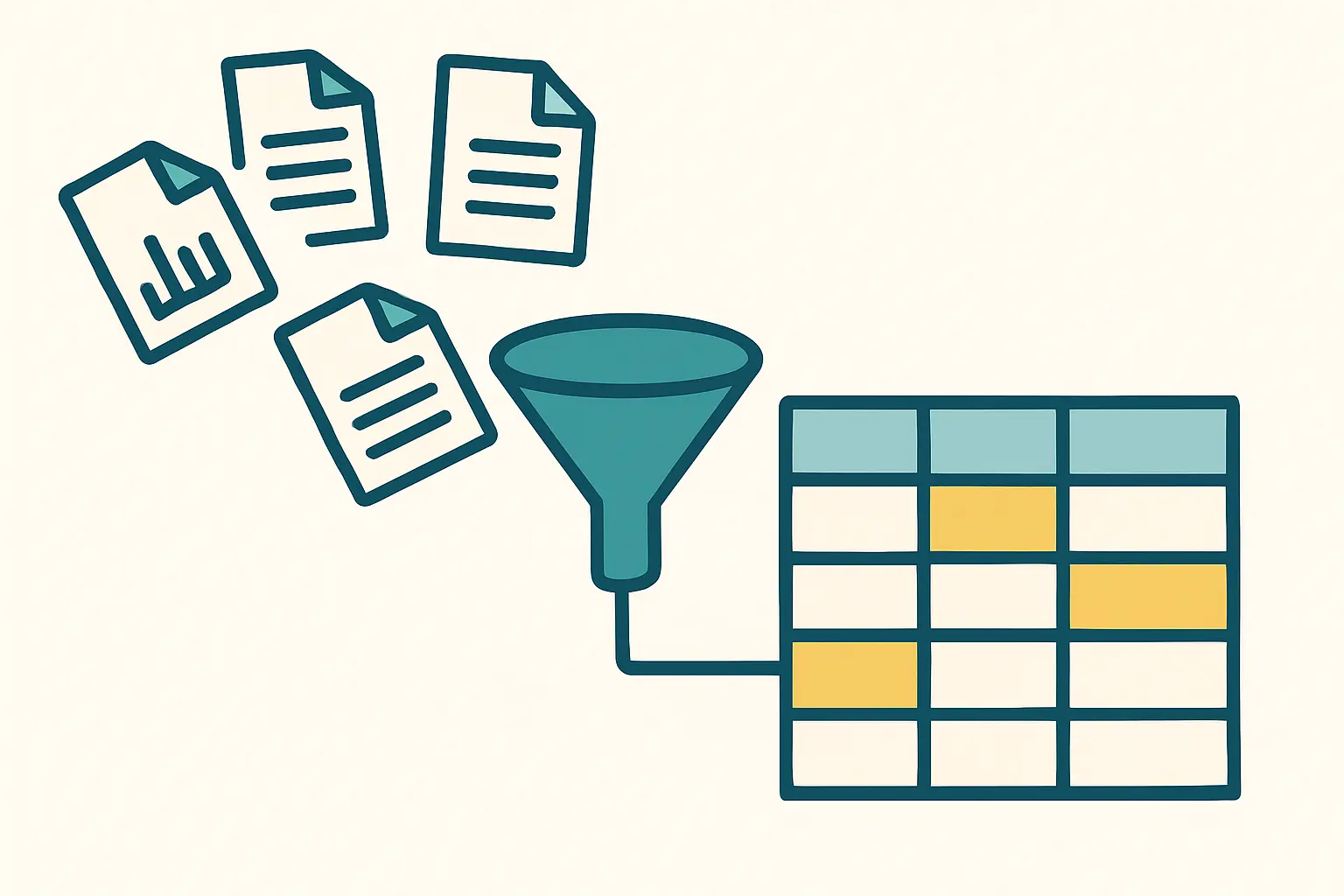
This is the step that separates synthesis from summary, and most students skip it. Create a table: one row per source, with columns for author and year, context and country, sample, method, key findings, limitations, and — the column that matters most — relevance to your question. Fill it as you read, in your own words, one or two lines per cell.
The magic is mechanical. When forty sources sit in comparable rows, patterns become visible that no amount of re-reading PDFs reveals: five studies agree in urban contexts but the two rural studies disagree; everyone measures satisfaction with the same instrument except one outlier; nobody has looked at your population. Those patterns are your themes, and the empty space they surround is your gap. Reading without the matrix, you know the papers; reading with it, you know the field.
Step 4: Structure the Chapter by Themes, Not Authors
Turn the patterns into your outline. A workable skeleton for most FYP and thesis reviews: a short introduction stating the review’s scope and logic; the theoretical foundation your study uses; two to four thematic sections built from your matrix (by variable, by relationship, by context — whatever comparison your question needs); and a closing synthesis that states the gap explicitly and hands over to your methodology.
Inside each thematic section, the paragraph unit is the claim, not the paper. Compare the two openings: “Rahman (2023) studied 200 factory workers and found…” versus “Evidence on flexible work and satisfaction is consistent in corporate settings (Rahman, 2023; Tan & Lee, 2024) but divides sharply in gig-economy samples (Lim, 2025).” The second sentence cites three papers, makes a comparison, and moves an argument forward — that is synthesis, and it is what your examiner is grading. Sequence sections so each ends by raising the question the next section answers, and the whole chapter drives toward your gap.
Step 5: Write the Gap Paragraph Like a Verdict
The final section of the review earns the whole chapter. State plainly what is established, what conflicts, and what is missing — then claim your territory. An adaptable pattern: “Taken together, prior studies establish [X] and suggest [Y], but three limitations persist: most evidence comes from [context], the [population] has rarely been examined, and findings on [relationship] remain contradictory. This study addresses these gaps by [your design in one clause].” A gap paragraph in this shape also writes your methodology’s opening for free — the two chapters should click together, which is why it pays to draft this section alongside your methodology chapter rather than months before it.
Step 6: Run the Three Tests Supervisors Apply
Before submitting the draft, test it the way it will be read. The highlighter test: mark every sentence that only summarises one paper; if any page is mostly marked, rewrite it around comparisons. The topic-sentence test: read only the first sentence of every paragraph, in order — the sequence should form a coherent argument ending at your gap; if it reads like a bibliography, restructure. The so-what test: for each section ask what it contributes to justifying your study; sections that exist because “the topic felt important” get cut, however long they took to write.
Then do the housekeeping that saves marks cheaply: every in-text citation appears in the reference list and vice versa, every paraphrase carries its citation, and quotes are marked as quotes. Reviews are the most citation-dense chapter of the thesis, which makes them the chapter where sloppy source-handling is most visible — and most punished.
Common Mistakes That Cost the Most
- The annotated-bibliography chapter: paper-by-paper summaries stapled together. Fix with the matrix and the claim-first paragraph unit.
- Reading forever, writing never: set a screening cutoff and start drafting once your matrix rows stop adding new patterns.
- Only supportive sources: a review with no conflicting findings looks curated. Contradictions are not a weakness — they are usually your gap.
- Outdated coverage: a 2026 review whose newest source is 2019 signals a stale search; re-run your strings before submission.
- Citing papers you never opened: secondary citations inherited from other reviews carry their errors. Open every source you cite, or cite it as a secondary source per your handbook’s format.
Sixty papers, one argument — without losing track of a single citation. Tesify keeps your sources attached to every claim as you draft, builds the reference list automatically, and helps structure theme-based chapters. Your review stays 100% written by you. Draft your literature review in Tesify.
FAQ: Literature Reviews
What is a literature review supposed to do?
Build an argument from existing research — what is known, what conflicts, what is missing — ending at the gap your study fills. It is organised by themes and claims, not by authors and summaries.
How many sources do I need?
No universal number exists; your faculty handbook may state an expectation for your level. Coverage of your topic’s key studies matters more than count — one missed landmark paper costs more than twenty fillers gain.
How recent should my sources be?
Anchor the review in recent work (commonly the last five to ten years) while keeping the foundational theories whatever their age. A field’s classics plus its current conversation is the standard mix.
What is a synthesis matrix?
A table with one row per source and columns for context, sample, method, findings, limitations and relevance. It forces comparative reading, and your themes and gap emerge from its columns.
Can I cite textbooks and websites?
Sparingly. Textbooks work for established definitions and theories; the evidential weight must come from peer-reviewed studies. Websites only for facts that genuinely live there (statistics portals, official policies), cited with access dates.
Should the literature review be written before data collection?
A solid version must exist before your proposal, since it justifies the study — but treat it as living: new relevant papers published during your project belong in the final draft, and examiners notice their absence.
How do I handle two studies with opposite findings?
Present both and interrogate the difference — sample, context, instrument, timeframe. Explaining a contradiction is one of the strongest analytical moves a review can make, and often it points directly at your gap.
Is it plagiarism to build on another review’s structure?
Using published reviews to discover sources is normal scholarship; copying their organisation or wording is not. Read the primary studies yourself and let your matrix — not someone else’s chapter — generate your structure.
How long should the literature review chapter be?
Faculty handbooks and supervisors set the range; proportionally it is often the largest chapter before the findings. Length follows from covering your themes properly — padding is as visible as thinness.
Can AI tools write my literature review?
They can help you search, organise and polish — with disclosure per your faculty’s rules — but the reading, comparison and argument must be yours, and every citation must be verified against the actual paper. Generated reviews fabricate references and collapse in vivas.