The short answer: these two tools answer different questions. Turnitin tells your university whether your thesis matches other student papers, publications and the web — using a repository Grammarly cannot see. Grammarly tells you, while drafting, whether your text matches web pages and ProQuest’s academic databases — at a moment when Turnitin is not available to you. Treating either score as a prediction of the other is the single most common mistake Malaysian students make in submission week. Here is the honest comparison, criteria declared up front.
Comparison Table
| Criterion | Turnitin | Grammarly (Premium) |
|---|---|---|
| Comparison database | Student papers + current and archived web + premium publisher articles (170 languages, 20+ years of content) | “Over 16 billion web pages and academic papers in ProQuest’s databases” |
| Sees previously submitted theses/FYPs | Yes — its defining advantage | No |
| Who buys it | Institutions (your access is via your university) | Individuals (consumer subscription) |
| When you can use it | When your faculty runs the check (attempts often limited) | Any time, unlimited, while drafting |
| Output | Similarity Report for examiners; the vendor states it “does not determine whether plagiarism has occurred” | Originality score + flagged passages + citation suggestions for the writer |
| Manipulation detection | Flags Panel for “replaced or hidden characters” | Not its focus |
| Extras relevant to integrity | AI writing detection (institution-dependent) | Authorship feature categorising text origin (AI / web / typed) |
Every claim in that table comes from the two vendors’ own product pages, read in August 2026; both products evolve, so verify before you rely on a detail.
Our Criteria
We compare on four things that matter to a Malaysian FYP or thesis writer: what the tool actually checks against, when in your workflow you can use it, what the score legitimately tells you, and cost in ringgit terms. We are explicit about the last one: Turnitin’s price to you is usually zero because your university pays — but so is your control over when it runs.
Round 1: The Database — Where This Comparison Is Decided
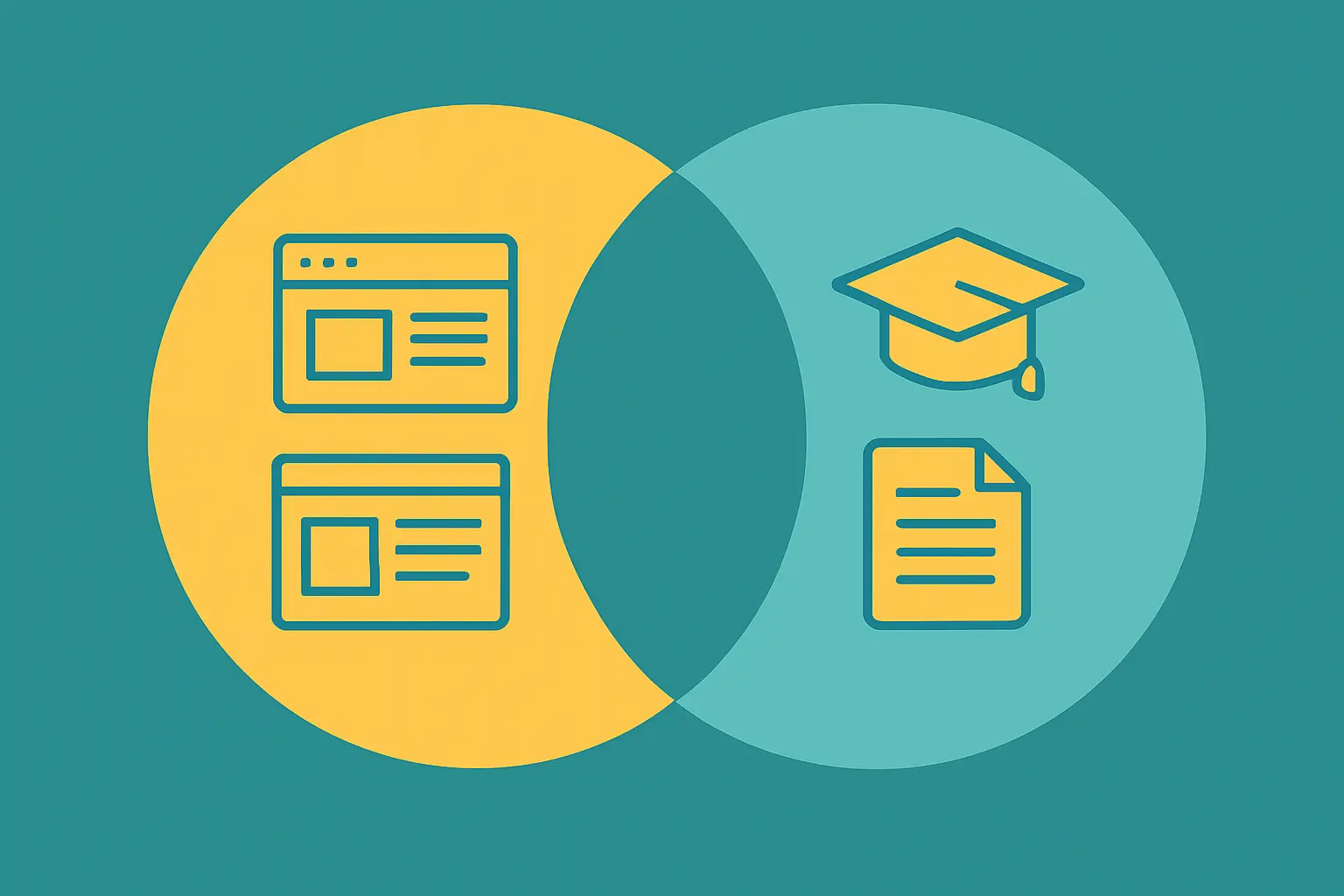
Grammarly’s checker is genuinely large — its own page cites over 16 billion web pages plus ProQuest’s academic databases. For web content and published papers, it sees plenty. What it does not hold is the thing that dominates thesis similarity reports: other students’ work. Turnitin’s repository explicitly includes student submissions accumulated over two decades, and that is precisely where FYP and thesis matches concentrate — the chapter structures passed between batches, the quoted definitions every cohort uses, the questionnaire items adapted from the same senior’s appendix.
The consequence is asymmetric and worth stating plainly: a high Grammarly score means you definitely have matches; a low Grammarly score does not mean Turnitin will be clean. If your writing habits lean on seniors’ theses, the gap between the two scores can be large — and it is the Turnitin number your faculty reads against its threshold (a threshold that, as we cover in what similarity percentage is acceptable, is set by your institution, not by any tool).
Round 2: Workflow Timing
Turnitin enters your life late — when the faculty runs the official check, often with limited attempts. Grammarly runs whenever you want, on any draft, which makes it structurally useful for the job Turnitin cannot do: catching the paraphrase you forgot to cite in week six rather than submission week. Used this way, Grammarly’s flagged passages function as a to-do list: each highlight is either a properly cited quote (fine), a paraphrase missing its citation (fix now) or copied scaffolding you meant to rewrite (rewrite now). Used as a “will I pass?” oracle, the same feature misleads, for the database reasons above.
Round 3: What the Scores Legitimately Tell You
Turnitin’s own product page states the tool “does not determine whether plagiarism has occurred” — the Similarity Report equips a human examiner to judge. Grammarly’s originality score has even less institutional meaning: it is a private drafting signal. Neither number is a verdict; both are maps of matches. The verdict, at your university, is made by people reading the report — which is why the durable strategy is not score management but source management: quote what you quote, cite what you paraphrase, and keep your reference list synchronised with your text. If your reference handling is the weak point, fix the tooling first — our Mendeley vs Zotero vs EndNote comparison covers that decision.
One more asymmetry: Turnitin documents a Flags Panel that surfaces “replaced or hidden characters” — the classic score-gaming tricks. Grammarly has no reason to police this. If you were ever tempted to launder a score, know that the tool your faculty uses is the one built to notice, and a manipulation flag converts a formatting problem into an intent problem. The same logic applies to AI-generated text, which Turnitin’s separate detection capability targets — see can Turnitin detect ChatGPT.
Round 4: Cost and Access in Practice
Turnitin is not a consumer product: students get it through their institution, on the institution’s schedule and settings. Grammarly’s plagiarism checking sits in its Premium consumer subscription — a real monthly cost in ringgit that only makes sense if you will use the drafting feedback too, since the plagiarism module alone duplicates what your faculty check will do better. Weaknesses, stated plainly: Turnitin gives you no self-serve early warning; Grammarly gives you no visibility into the student-paper matches that will actually decide your official score. Neither weakness is fixable by the other tool’s strengths — which is why the sensible workflow uses each for what it is.
Recommendations by User Type
Final-semester student with faculty Turnitin access and no budget: skip Grammarly Premium; ask your faculty how many official check attempts you get, run one early, and spend your effort on citation hygiene.
Writer who wants continuous feedback while drafting in English: Grammarly Premium earns its fee as a drafting assistant with plagiarism spot-checks — just never read its score as a Turnitin forecast.
Student whose real problem is citations drifting out of sync with the text: neither tool solves that. Tesify does it structurally — citations stay attached to sources as you write, the bibliography stays synchronised, and the Tesify Plagiarism Checker runs inside the same workflow, so the official check becomes a formality instead of a lottery.
Anyone tempted to “fix the score” cosmetically: no tool is the answer; the flags are real and the risk conversion (carelessness → intent) is the worst trade in academia.
The check you should really optimise for is the viva, not the percentage. Tesify keeps every citation connected to its source while you write, so your similarity report contains only matches you can explain in one sentence. Used by 9,000+ students — your thesis, 100% written by you. Write with Tesify.
FAQ: Turnitin vs Grammarly
Is Grammarly’s plagiarism checker as good as Turnitin?
They check different databases. Grammarly: 16+ billion web pages plus ProQuest. Turnitin: those categories plus a student-paper repository — where most thesis matches live. Clean on one does not mean clean on the other.
Why is my Turnitin score higher than my Grammarly score?
Turnitin sees previously submitted student work that Grammarly cannot check. Thesis text most often matches other student work, so the official score usually lands higher than any web-only pre-check.
Can students buy Turnitin directly?
It is licensed to institutions; your access comes through your university’s process. Grammarly is a consumer subscription anyone can buy.
Does Grammarly detect AI-generated text?
Grammarly’s Authorship feature categorises where text came from (generative AI, online sources, typed) for transparency on your side. Institutional AI screening is a different function — that is Turnitin’s territory, where enabled.
Will checking my thesis in Grammarly leak it into a database?
Read the current privacy terms of any service before uploading a full thesis — policies change and differ by plan. As a rule, upload chapters to services whose retention policy you have actually read.
Should I pay for Grammarly just for the plagiarism checker?
Usually not — the module alone duplicates what your faculty’s official check does with a better database. It earns its fee only if you also want the drafting feedback.
Do Turnitin and Grammarly count quotes and references the same way?
No. Turnitin’s institutional settings can exclude quotes and bibliographies; Grammarly flags matches for you to interpret. Same document, different settings, different numbers — by design.
Which score does my university care about?
Only the official one from its own check, read against its own threshold and exclusions by its own examiners. Every other number is private drafting feedback.
Can I use both together?
Yes — that is the sensible pattern: Grammarly (or any drafting checker) early and often to find missing citations, the official Turnitin check as the final gate. Just keep the roles straight: one is a torch, the other is the gate.
What actually keeps both scores low?
Source hygiene, not tooling: cite at the moment of use, mark quotes immediately, paraphrase from understanding, and audit text-versus-bibliography both ways before submission. Boring, effective, and immune to database differences.