
In short: A design thesis in architecture at a Malaysian university pairs a design studio project — a building or urban proposal developed from a self-defined brief through to detailed drawings and a model — with a shorter written research document that grounds the design in precedent, site analysis and a stated position. It is examined at a final review or jury, not a conventional viva, and most rejections come from a design that outgrew its research rather than from weak drawing skill.
Architecture is one of the few Malaysian disciplines where the professional accreditation body, Lembaga Arkitek Malaysia (LAM), sets the shape of the thesis itself: the LAM Part 1 (an accredited bachelor’s degree) and Part 2 (an accredited master’s, typically Master of Architecture) stages each carry their own design thesis, and Part 2’s is the one most students mean when they say “my architecture thesis.” This guide covers how to structure that project, what the jury expects at the final review, and where most design theses go wrong.
Step 1: Understand where the design thesis sits in your accreditation path
The Malaysian route to registered architect runs through three LAM stages: Part 1, an accredited bachelor’s degree; Part 2, an accredited master’s degree that most students complete after a period of logged practical experience; and Part 3, the professional practice examination taken after further practice, which establishes the competency to practise independently. The design thesis this guide covers is the Part 2 project — commonly called the major project, design thesis or thesis design studio depending on the school — and it is the last academic milestone before Part 3 and full registration. The whole path from the start of Part 1 to registration typically runs seven to nine years, so treat the Part 2 thesis as the culmination of a long accreditation sequence, not a standalone assignment.
Step 2: Choose a brief you can defend, not just one you find exciting
A design thesis brief has three components you must be able to justify individually: a building or urban typology, a specific site, and a position — the argument your design makes about how that typology should respond to that site and its context. Juries reject briefs most often for scope, not ambition: a typology too large to design at the depth Part 2 requires within two semesters, or a site chosen for its visual appeal without a clear site-specific problem the design addresses. Choose a typology you can research in depth — enough precedent studies exist, enough site data is accessible — and state the position in one sentence before you begin design development, the same discipline our guide to writing a research problem statement sets out for other fields, adapted here to a design argument rather than a research question.
Step 3: Build the written research component around your design position
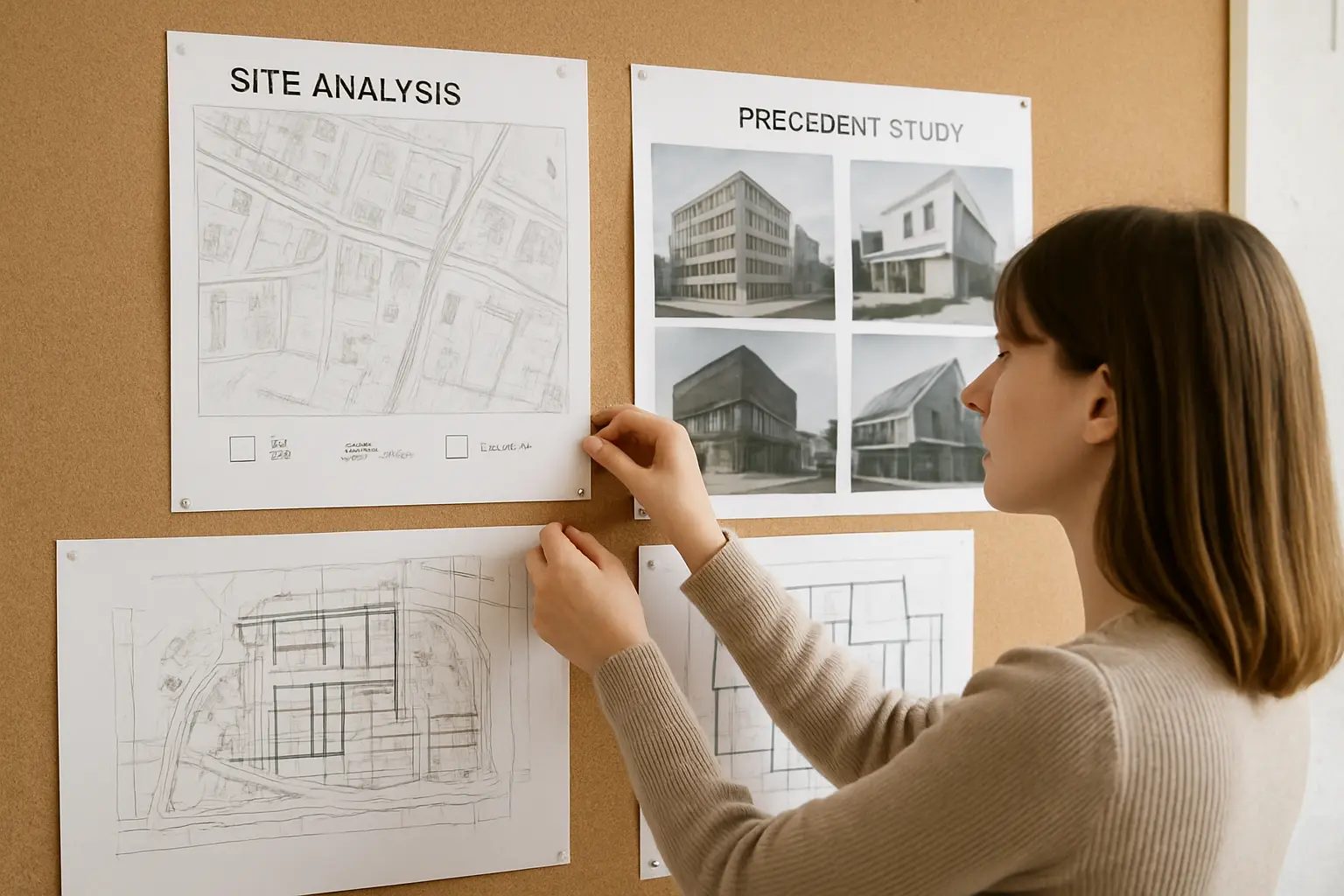
The written document that accompanies a design thesis is shorter than a conventional dissertation but still needs a clear structure: an introduction stating your position and its significance, a precedent study section analysing three to five comparable projects for what they solved and where they fell short, a site and context analysis covering climate, regulation, users and surrounding fabric, and a design methodology section explaining how your process moved from research to concept to detailed proposal. Keep every section tied back to decisions visible in your drawings — a precedent study that never resurfaces in the design development reads as padding, and juries notice.
Step 4: Develop the design in stages the jury can follow
Structure your design development so a jury unfamiliar with your process can trace it: concept sketches and diagrams that state the core idea, a massing and planning stage that tests the concept against the site and programme, a technical development stage addressing structure, services and construction, and a final proposal stage with fully resolved drawings, sections and details. Keep intermediate stages in your final presentation, even abbreviated — a jury that only sees the finished building cannot assess whether your process was rigorous or whether the final form is the first idea you had, undeveloped.
Step 5: Prepare for the final review, not a conventional viva
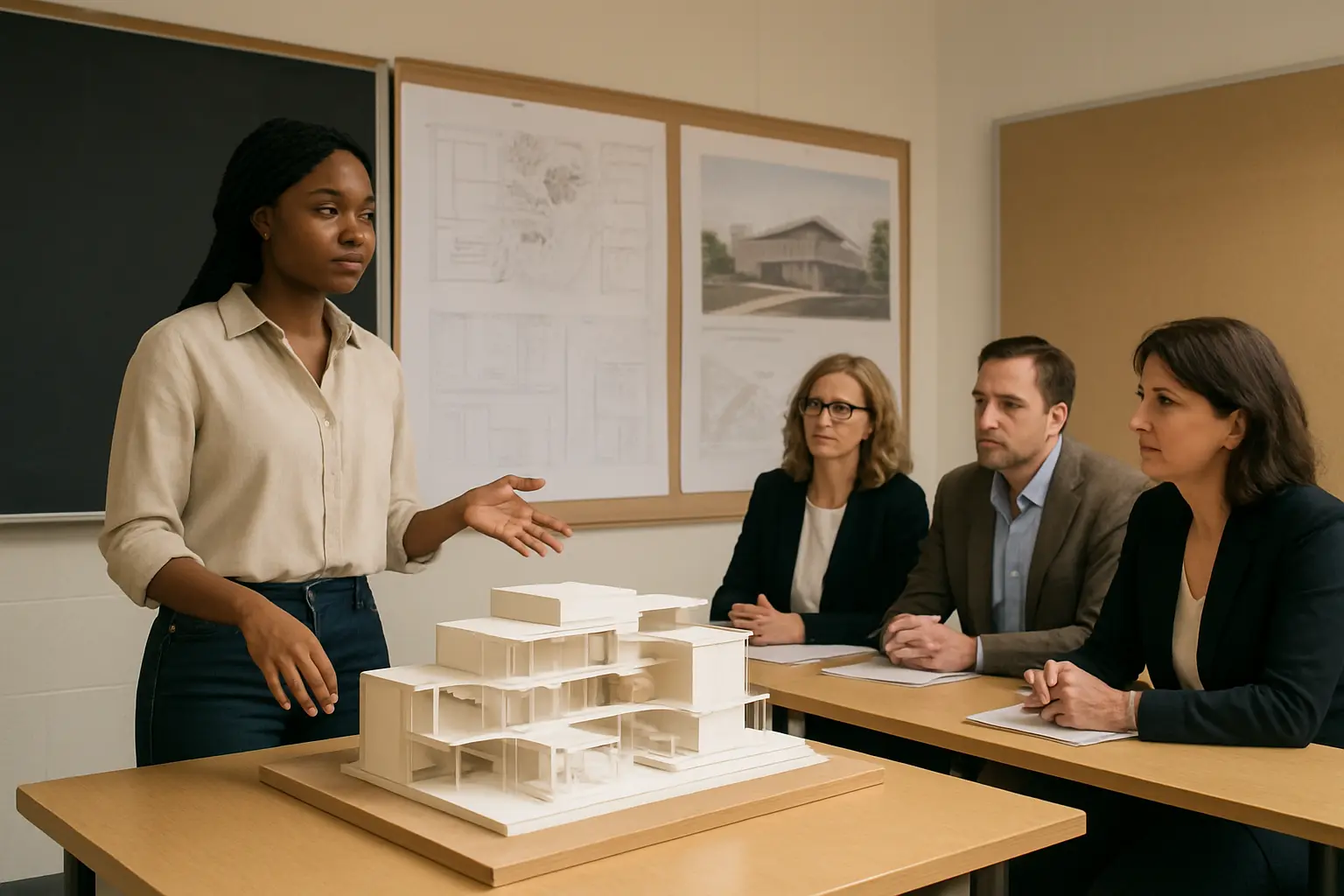
A design thesis is examined at a final review or jury crit rather than a closed-room viva: you present your board and model to a panel that typically includes external practitioners as well as faculty, in front of other students, and the panel questions your design decisions in real time during and after the presentation. Prepare a presentation that runs to time without reading from notes, and prepare short, specific answers to the decisions a critical juror will probe hardest: why this site, why this typology, why this specific formal or spatial move rather than an alternative you could show you considered. A design decision defended with “I liked how it looked” reads far weaker than one defended with the site condition, precedent or programmatic requirement that drove it.
How does a design thesis differ from a research-based thesis?
A research-based thesis in most Malaysian faculties argues a claim through evidence and answers a research question with data; a design thesis argues a position through a built proposal and answers a design problem with a resolved building or urban intervention. The written component still needs the structural discipline of a research argument — a stated position, evidence for it, and a conclusion that follows — but the evidence is precedent, site analysis and design reasoning rather than statistical results. Students moving from a research-heavy Part 1 dissertation into a design-heavy Part 2 project sometimes over-write the document and under-develop the design, or the reverse; the balance most Malaysian schools expect leans toward the design work, with the writing in service of explaining and justifying it. Our guide to writing a literature review covers the research-argument discipline your precedent study section borrows, even though a precedent study is not a literature review in the conventional sense.
How should I manage two semesters of studio time?
Most design theses fail from poor pacing rather than poor ideas: too long spent on precedent research and site analysis leaves too little time for technical resolution, and too little time on research produces a design with no defensible position. A workable split allocates the first quarter to precedent study, site analysis and brief development; the second quarter to concept design and massing; the third to technical development, structure and services integration; and the final quarter to detailed resolution, drawing production and presentation preparation, with a buffer before the final review for model-making and rehearsal. Set your own interim milestones ahead of any studio-set ones, working backward from the final review date the same way our guide to preparing for a viva recommends counting back from the defence date — architecture studio pacing compresses badly if the first half runs long, leaving too little slack for the technical resolution stage.
What does the written document’s introduction and summary look like?
The introduction states your position in the first paragraph, in language a jury member outside your specific site could follow without having seen your drawings: the typology, the site, the problem you identified, and the design response in outline. A short abstract-style summary at the front, following the same discipline our guide to writing a thesis abstract sets out, helps a jury member who has read forty other submissions orient quickly to yours before the presentation begins. Keep this summary to what the design actually does, not what you hoped it would achieve; an abstract that oversells the proposal sets up a final review question you may not be able to answer.
What makes examiners reject a design thesis?
Four patterns recur. A design that solves a problem the written research never established, so the jury cannot see what question the building answers. A brief too broad for two semesters, resulting in a design resolved at concept stage but not at construction detail, which Part 2 requires. Precedent studies that describe rather than analyse — listing a project’s facts without stating what it got right or wrong and why that matters for your own brief. And a final presentation that cannot survive questioning because the student cannot articulate the reasoning behind a design decision beyond aesthetic preference. Each of these is fixable earlier in the process; none is fixable in the week before the final review.
Draft the written component of your design thesis while your design decisions are fresh
The written research component is easiest to draft accurately while you can still explain exactly why each design decision was made — and hardest to reconstruct once the studio has moved on to the next stage. Tesify helps you draft the introduction, precedent analysis and design methodology sections in the structure Malaysian architecture juries expect: describe your brief, your precedents and your site, and it returns a structured draft you check against your actual design decisions and adapt in your own words.
Draft your architecture design thesis document with Tesify
Frequently asked questions
Is the architecture design thesis the same as a written dissertation?
No. It pairs a design studio project (drawings, model, presentation) with a shorter written research component that grounds the design; the design work, not the writing, is the larger part of the assessment at most Malaysian schools.
Do I need LAM Part 1 completed before starting the Part 2 design thesis?
Yes, Part 2 programmes require an accredited Part 1 degree (and typically a period of logged practical experience) as an entry requirement; check your specific programme’s admission requirements for the exact conditions.
How long does the design thesis take to complete?
Most Malaysian Part 2 programmes run the design thesis across one full academic year, split into a research and brief-development semester followed by a design-development semester, though the exact split varies by school.
Can I choose a site outside Malaysia for my design thesis?
Some programmes allow it, but a site you can visit, measure and photograph yourself produces a stronger site analysis than one studied only through secondary sources; check your programme’s policy before committing.
What happens if the jury does not accept my final proposal?
Outcomes vary by faculty: some require a resubmission with revisions, others a full re-presentation the following semester. Ask your studio coordinator about the specific consequence and timeline early, not after a difficult review.
How many precedent studies should the written component include?
Three to five analysed in depth is more useful to a jury than ten described briefly; depth of analysis, not count, is what juries credit.
Do I present alone at the final review, or as part of a group?
The Part 2 design thesis is almost always an individual project with an individual presentation, unlike some earlier-year studio assignments that may be group-based.
What software do Malaysian architecture students typically use for the design thesis?
Most schools expect proficiency in a CAD and 3D modelling package alongside hand-drawing and physical model-making; specific software requirements vary by studio, so confirm with your coordinator rather than assuming one standard.
Should the written component include a literature review like other theses?
It typically includes a precedent and theoretical positioning section that functions similarly — situating your design position against existing projects and design thinking — rather than a conventional academic literature review of journal articles.
Is the final review the same as LAM Part 3?
No. The final review examines your Part 2 academic design thesis; Part 3 is a separate professional practice examination taken later, after further logged practical experience, and covers professional conduct and practice rather than design work.