| Source | Best for | Cost | Malaysian TESL/AL coverage | Verdict |
|---|---|---|---|---|
| ERIC (Education Resources Information Center) | Education and language-teaching research specifically | Free | Includes some Malaysian-authored articles published internationally | Start here for TESL/AL topics — it is a dedicated education research library |
| Scopus | Citation counts, journal standing, finding highly-cited work | Paid (usually via your university library) | Indexes 3L and GEMA, the two UKM Press language journals | Best for checking a journal or author’s standing before you cite them |
| MyJurnal | Malaysian-published journals across disciplines | Free to search | A national index of Malaysian journals, including language-studies titles | A free way to find Malaysia-specific TESL/AL studies |
| Google Scholar | Broad first-pass search, grey literature, theses | Free | Surfaces Malaysian university repositories and unpublished theses | Good for a first sweep, not a citation-management source on its own |
| ProQuest Dissertations & Theses | Full-text theses and dissertations from other universities | Paid (usually via your university library) | Limited direct Malaysian coverage, strong for comparable international theses | Use to see how a similar thesis abroad structured its literature review |
| JSTOR | Older, foundational linguistics and education journal articles | Paid (usually via your university library) | Weak on recent Malaysian output, strong on older journal back-runs | Use for foundational theory, not current Malaysian empirical studies |
Where to start: ERIC for the field, MyJurnal for the Malaysian angle
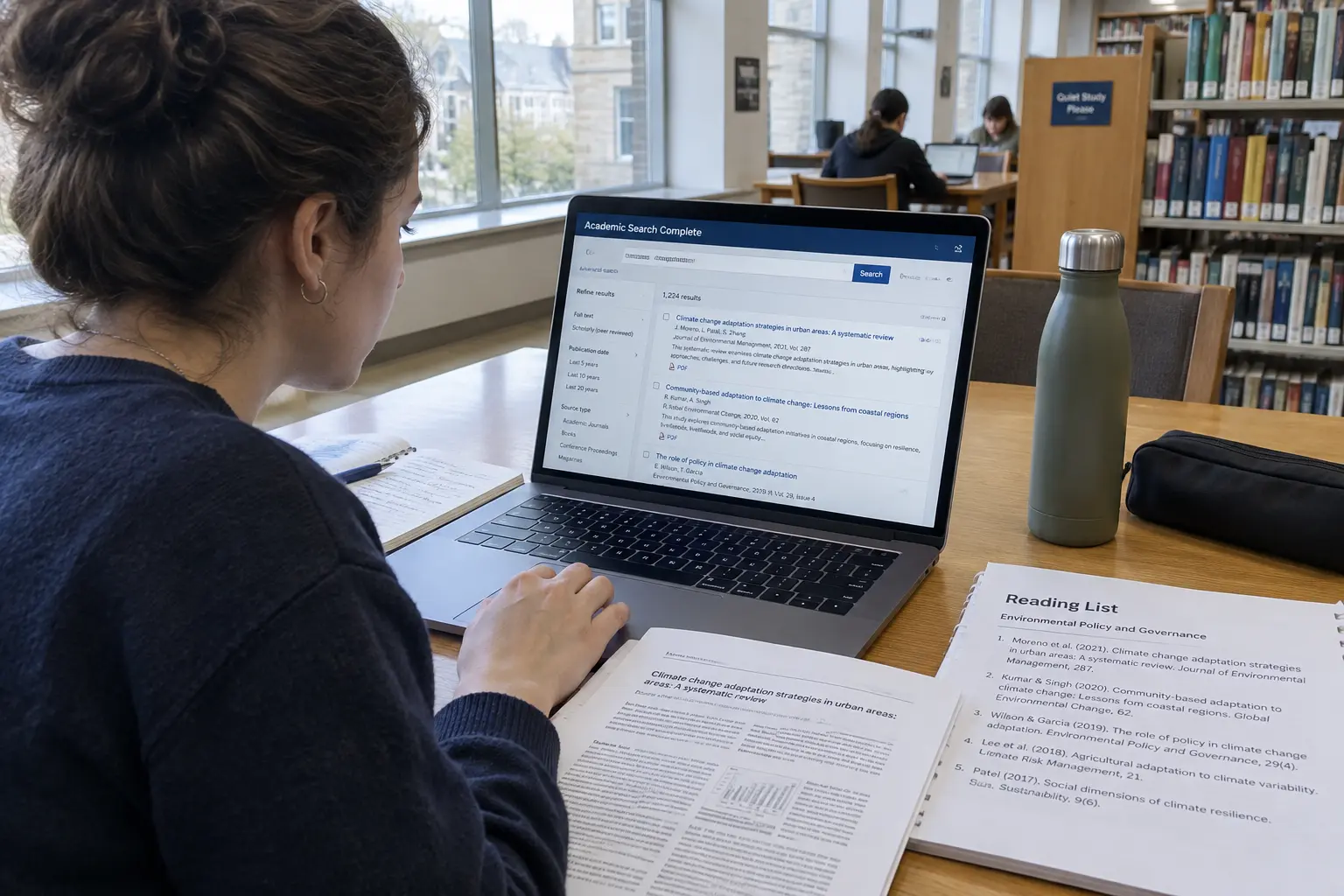
A TESL or Applied Linguistics thesis in Malaysia almost always needs two kinds of source: the international literature that established your theoretical framework or method, and the Malaysian studies that show your gap has not already been filled locally. ERIC (eric.ed.gov), an online digital library of education research sponsored by the Institute of Education Sciences of the US Department of Education, is free and built specifically for education research — start your literature search there. Then move to MyJurnal, Malaysia’s national index of Malaysian-published journals, to check what Malaysian TESL/AL researchers have already published on your topic.
Which Malaysian journals should I be checking specifically?
A thesis that only cites international sources reads as though the writer never checked whether the field already has an answer for Malaysia specifically, which is exactly the kind of gap examiners probe for at the proposal stage. Two flagship titles, both published by UKM Press at Universiti Kebangsaan Malaysia and both described by the publisher as ESCI (Web of Science) and Scopus indexed, cover much of the field’s Malaysian output: 3L: Language, Linguistics, Literature — The Southeast Asian Journal of English Language Studies, focused on English language studies in multilingual contexts across language, linguistics and literature, and GEMA Online Journal of Language Studies, covering English language, linguistics, foreign languages and literature, including classroom practice. Both have their own archives on UKM’s journal platform and are findable through Scopus if your university has access — search both by your specific topic (not just “TESL” or “applied linguistics,” which returns too broad a result set) to find directly comparable Malaysian studies.
One habit worth building early: search ERIC and MyJurnal with the same core search terms side by side, rather than treating them as sequential steps you finish one at a time. Running the identical string through both shows you directly where the international literature and the Malaysian literature diverge — a gap that shows up clearly in ERIC but returns nothing in MyJurnal is often exactly the kind of Malaysia-specific gap your problem statement needs, while a topic saturated in both suggests you may need to narrow your angle further before your supervisor will approve it.
How do I use Scopus if my topic needs a citation count or a journal’s standing?
Scopus is the tool for a specific job: checking how often a paper has been cited, comparing a journal’s standing before you rely heavily on it, or confirming an author’s other published work in the same area. It is not usually the first place to search a new topic — ERIC or MyJurnal will surface more directly relevant papers faster. Use Scopus once you already have a shortlist of key papers, to see which ones the field treats as foundational (high citation counts) versus recent and still-emerging — a distinction worth noting explicitly in your literature review when you introduce a source, since it signals to your examiner that you understand where a paper sits in the field’s conversation.
What should I use Google Scholar for, and what should I not rely on it for?
Google Scholar is the fastest way to do a first broad sweep of a topic, and it is a free tool that often surfaces unpublished or hard-to-find Malaysian theses sitting in a university repository. It is not curated the way a subject-specific index is, so treat every result as a lead to verify rather than a finished citation. Do not rely on it as your only source, though: it mixes peer-reviewed journal articles with unreviewed preprints, conference abstracts, and student work of uneven quality, and it does not tell you a journal’s indexing status the way Scopus does. Use it to find leads, then verify each source’s actual publication venue before you cite it.
Do I need ProQuest or JSTOR for a Malaysian TESL/AL thesis?
Only situationally. ProQuest Dissertations & Theses is worth a search when you want to see how a comparable thesis at another university (often outside Malaysia) structured its literature review or methodology — useful as a model, less useful as a source of Malaysian-specific findings. JSTOR is strongest for older journal articles in linguistics and language education, including the debates around foundational second-language acquisition ideas such as the input and output hypotheses, rather than current Malaysian empirical work — expect to find the theory debates there and the Malaysian application of them in MyJurnal, Scopus or ERIC instead.
What is the recommended search order for a literature review chapter?
- ERIC — establish the international literature on your specific topic and method.
- MyJurnal — find Malaysian studies on the same or closely related topics.
- Scopus — check citation counts and journal standing for your key sources, and search 3L and GEMA directly if your library has access.
- Google Scholar — sweep for anything ERIC and MyJurnal missed, including unpublished Malaysian theses.
- JSTOR or ProQuest — fill in foundational theory papers or comparable international thesis structures, as needed.
This order front-loads the sources most likely to be directly relevant to a Malaysian TESL/AL thesis, and treats the broader, less-curated tools (Google Scholar, ProQuest, JSTOR) as a final sweep rather than a starting point. Once you have sources from all five, how to write a literature review for your FYP or thesis covers turning the pile into a synthesised chapter rather than a source-by-source summary, and the best AI tools for finding papers and building a literature review can speed up the discovery step itself if your search is still slow.
How do I check a journal isn’t predatory before I cite it?
A journal that will publish almost anything for a fee, with little or no real peer review, still shows up in a broad Google Scholar search, and citing one weakens your whole reference list even if the article itself looks plausible. Cross-check any unfamiliar journal against MyJurnal or Scopus before you cite it — if a journal claiming to cover TESL/AL is not indexed in either, that is a reason to look more carefully, not necessarily a reason to reject it outright, since some genuinely reputable regional journals are still building their indexing history. Some faculties also publish their own list of blacklisted publishers for postgraduate publication requirements (see the list used at Universiti Malaya’s Faculty of Education as one worked example) — the same caution is worth applying to any source you cite, not only to a source you are trying to publish in.
Should I keep my sources in a reference manager as I search?
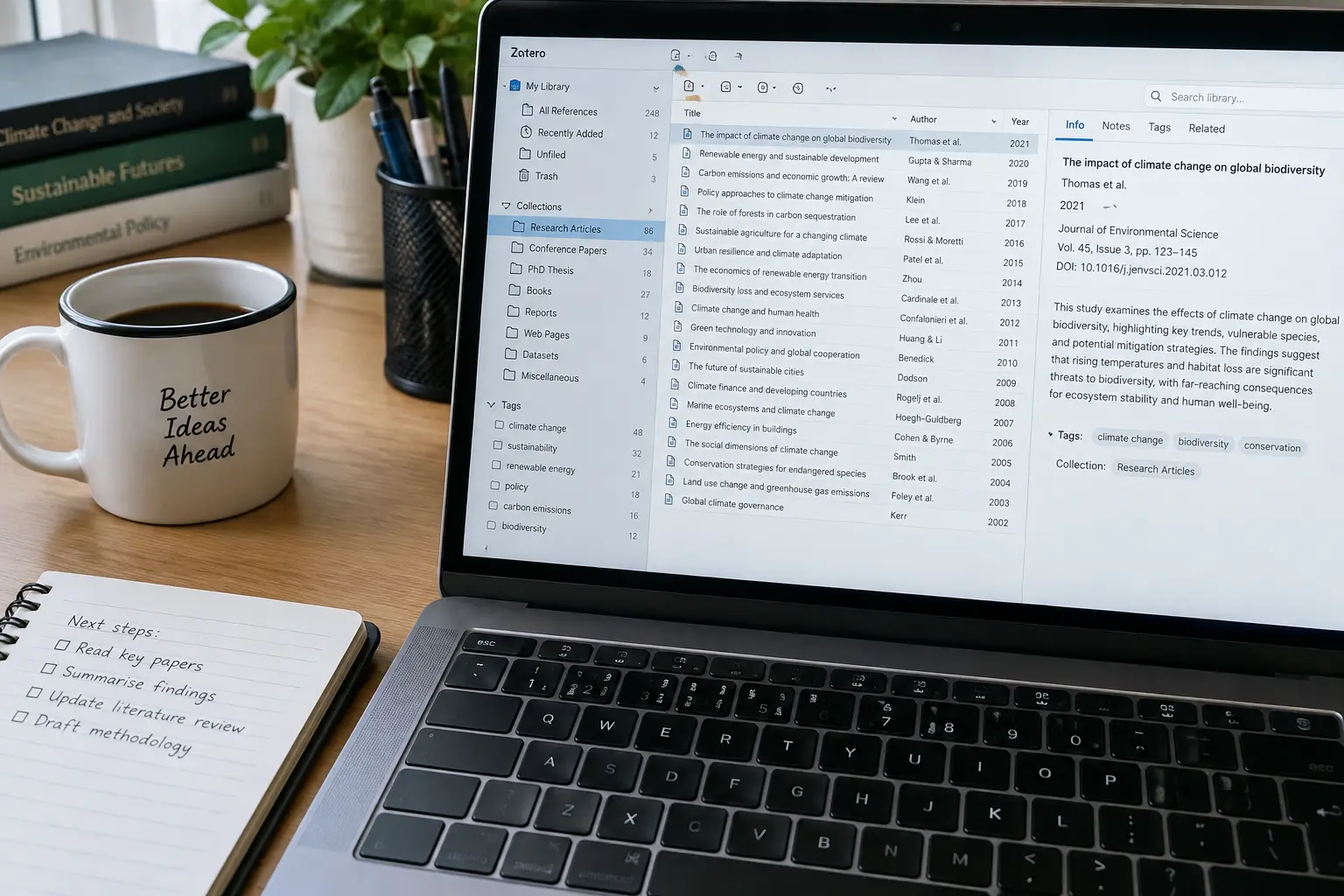
Yes, from the very first search session rather than after you have already gathered forty PDFs — retrofitting citation data onto files you saved without it is slower than logging each source as you find it. See Mendeley vs Zotero vs EndNote for Malaysian postgraduates for a comparison of the three main options, and note which reporting verb you use to introduce each source as you log it — how to choose reporting verbs in a literature review covers the stance each verb commits you to, which matters as much for a TESL/AL synthesis as for any other field.
Where Tesify fits into this workflow
Once you have gathered and read your sources from ERIC, MyJurnal and Scopus, Tesify helps you plan and draft the literature review chapter itself, theme by theme, so the synthesis — not a source-by-source summary — reaches the page. Every judgement about what each source shows stays yours, and the thesis stays 100% written by you. More than 9,000 students have used Tesify, across 15,000+ chapters.
Frequently asked questions
What is the best free database for a Malaysian TESL thesis?
ERIC for the international literature and MyJurnal for the Malaysian literature — both are free to search and together cover much of what a TESL/AL thesis in Malaysia needs.
Which Malaysian journals should I search first for applied linguistics?
3L: Language, Linguistics, Literature — The Southeast Asian Journal of English Language Studies and GEMA Online Journal of Language Studies, both published by UKM Press at Universiti Kebangsaan Malaysia and both ESCI and Scopus indexed according to the publisher.
Is Scopus necessary if I already have access to ERIC and MyJurnal?
Not for finding sources, but it is the best tool for checking a journal’s standing or a paper’s citation count once you have a shortlist — useful if your faculty expects you to justify why your key sources are authoritative.
Can I rely on Google Scholar alone for my literature review?
No. It is a good first sweep and a free way to find unpublished Malaysian theses, but it mixes peer-reviewed and non-peer-reviewed material without labelling the difference, so every source still needs to be verified against its actual publication venue.
Do I need ProQuest for a Malaysian thesis?
Only if you want to see how a comparable thesis at another university structured its literature review or methodology — it has limited direct Malaysian coverage.
What is JSTOR best used for in this field?
Older journal articles in linguistics and language education, including the debates around foundational ideas such as the input or output hypothesis, rather than current Malaysian empirical research.
How do I search MyJurnal effectively?
Search by your specific topic rather than broad terms like “TESL” or “applied linguistics,” which return too large and unfocused a result set to be useful.
Is GEMA the same journal as 3L?
No, they are two separate UKM Press journals: 3L focuses on English language studies in multilingual contexts across language, linguistics and literature, while GEMA covers English language, linguistics, foreign languages and literature, including classroom practice. Both are Scopus indexed.
What search order should I use for my literature review chapter?
ERIC first for the international literature, then MyJurnal for the Malaysian literature, then Scopus to check standing, then Google Scholar as a final sweep, then JSTOR or ProQuest as needed for foundational theory or comparable thesis structures.
Are MyJurnal and MyCite the same thing?
No. MyJurnal is an index of Malaysian journals you search for articles, while MyCite is the Malaysian Citation Index, which universities use as an indexing benchmark for Malaysian journals — Universiti Malaya’s Faculty of Education, for example, lists MyCite among its accepted publication indexes.
How do I check whether an unfamiliar journal is predatory before I cite it?
Cross-check it against MyJurnal or Scopus first — a title with no presence in either is worth a closer look, though it is not automatic proof of a problem, since some legitimate regional journals are still building an indexing history.
When should I start using a reference manager?
From your very first search session, not after you have already gathered dozens of PDFs — logging citation data as you find each source is faster than retrofitting it later.